How to Clean Golf Clubs: Kit, Solution, and a 20-Second Mid-Round Routine
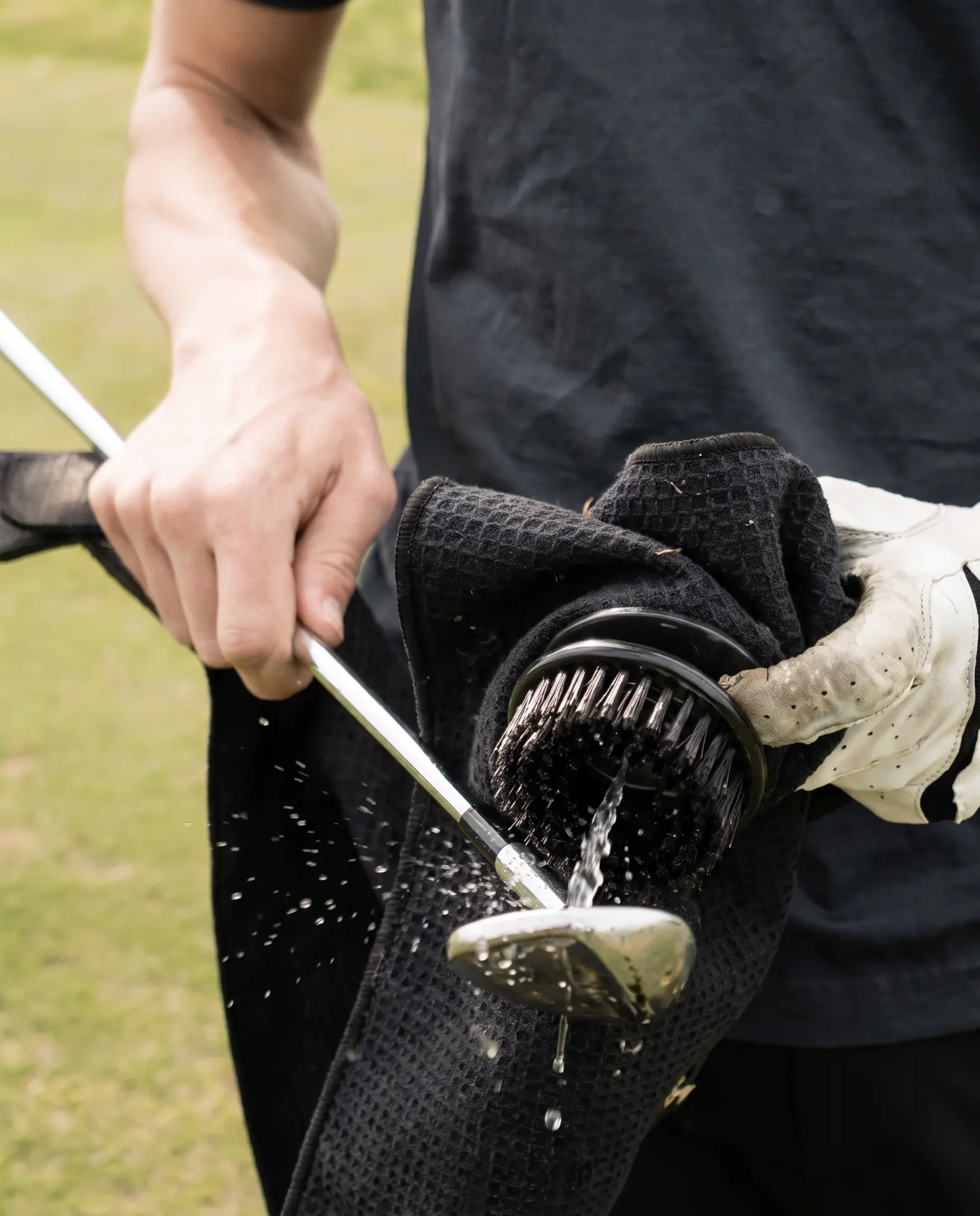
A deep clean at home, a fast routine on the course, and an honest look at what actually belongs in a club cleaning kit — plus the one household product that will wreck your grips.
Dirty grooves cost you spin. Spin is what stops a ball on a green. That's the entire argument for cleaning your clubs, and it's a good one — a packed wedge face on a half shot is the difference between a ball that checks and a ball that skips into the back fringe.
Here's the deep clean, the on-course routine, and what to actually buy.
The deep clean (10 minutes, once a month)
What you need: a bucket, warm water, a few drops of dish soap, a soft-bristle brush, an old toothbrush or groove brush, and a dry towel.
- Fill a bucket with warm — not hot — water and a small squeeze of dish soap. Hot water can soften the epoxy holding the head to the shaft. This matters more than people think.
- Soak the irons and wedges head-only for 5–10 minutes. Water line stays below the ferrule. Never submerge the hosel or let water run down the shaft.
- Brush the face and grooves with the nylon brush, then work the toothbrush along each groove individually. You'll be surprised how much comes out of a wedge you thought was clean.
- Rinse with clean water and dry immediately and completely. Standing water at the ferrule is how rust and separation start.
- Wipe the shaft with a damp cloth and dry it.
Woods, drivers and putters: don't soak them
Composite heads, painted crowns and glued-in inserts don't like immersion. Wipe with a damp microfiber cloth, dry, done. A soft brush on the face is fine; never use a metal brush on a driver face or a painted crown.
Cleaning grips (the part everyone skips)
Grips are the only thing you touch. They also collect the most oil and sweat, and a slick grip is a swing-wrecker.
- Warm water, mild dish soap, a soft brush or dishcloth
- Scrub the surface, rinse thoroughly, pat dry, air dry fully before playing
- Do this every 4–6 rounds. It restores far more tack than people expect and can add a season to a set of grips.
What not to use, ever: solvents, acetone, alcohol wipes, or degreasers. They dissolve the rubber compounds, and a grip that's been wiped with acetone will feel fine for one round and then go hard and shiny forever.
What actually belongs in a golf club cleaning kit
Most commercial kits are the same four items in a branded pouch. Buy the items, not the pouch:
- A dual-sided brush — nylon bristles for general dirt, brass bristles for irons and wedges only. Brass on a driver face or a painted crown will leave marks.
- A groove tool / sharpener pick — for scraping compacted dirt out of grooves. Use it to clean, not to deepen grooves; deepening them makes clubs non-conforming.
- A waffle microfiber towel — the weave scrubs in a way a flat towel doesn't.
- Water. Which is the awkward part, and the reason most on-course cleaning doesn't happen.
That last one is the real friction. A brush with no water is a dry brush, and dry brushing does very little on caked mud. This is why brush-and-reservoir designs exist — the Ryft towel builds a nylon brush fed by a refillable water reservoir into the towel itself, so the water is on the bag rather than at the ball washer three holes back. Whatever you use, the principle stands: a brush without water is half a tool.
Do you need a special golf club cleaning solution?
No. Warm water with a few drops of dish soap outperforms most commercial "golf club cleaner" at a fraction of the cost. Where specialty products earn their place is rust removal on older forged irons and metal polish for restoring a satin finish — neither of which is routine maintenance.
Never use: oven cleaner, bleach, or abrasive scouring powder. They'll strip the finish and pit the metal.
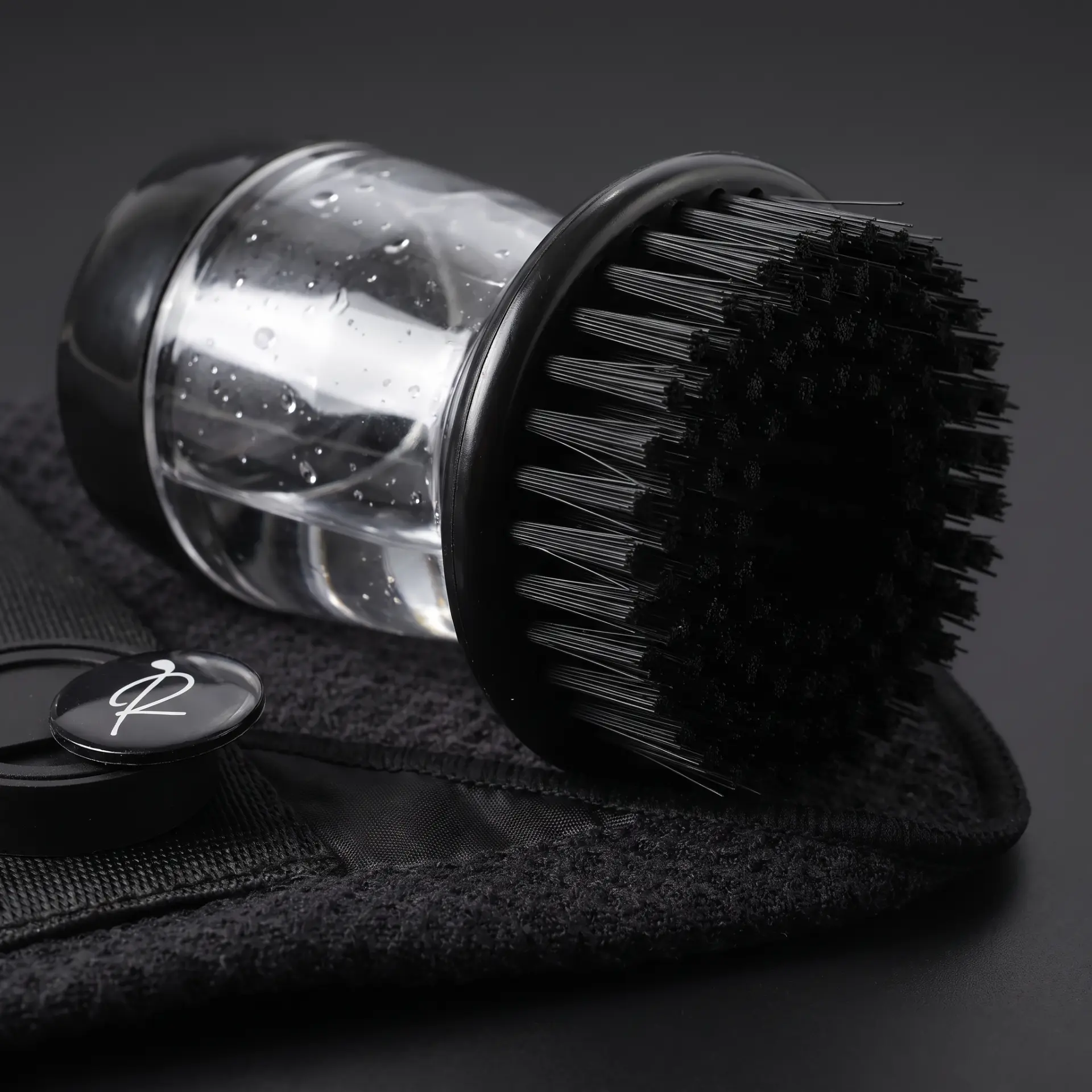
The 20-second mid-round routine
This is where the actual scoring benefit lives, because grooves fill up during a round, not between rounds.
After every full shot with an iron or wedge:
- Damp brush or damp side of the towel across the face, following the direction of the grooves
- Dry side of the towel to finish
- Back in the bag
Twenty seconds, no delay of play, and it keeps your wedges performing on the shots where spin matters most. The reason golfers don't do it is friction — water is inconvenient, and a soggy towel makes step two impossible.
The wet/dry problem: if you wet your only towel on the first tee, by the fourth hole you have one damp towel and no way to dry anything. The fix is either two towels — one damp for faces, one dry for grips and hands — or a design that keeps the water in a reservoir instead of in the towel. Our golf towel buyer's guide goes deeper on this, and the waffle vs. microfiber breakdown covers which fabric actually scrubs grooves.
Storage: the boring part that matters most
- Never leave clubs in a hot car trunk. Heat cycling degrades epoxy and grips faster than play does.
- Never store a wet bag zipped shut. Rust on faces and mildew in pockets.
- Empty the bag of old scorecards, banana peels and half-drunk bottles at the end of each round. Sounds trivial; it's where most bag mildew comes from.
Quick reference
| Task | Frequency | Tool |
|---|---|---|
| Wipe faces mid-round | Every full shot | Damp brush + towel |
| Full head clean | Every 3–4 rounds | Bucket, soap, brush |
| Grip wash | Every 4–6 rounds | Soap, water, soft brush |
| Deep clean + shaft wipe | Monthly | Full kit |
| Regrip | Every 40–60 rounds | Pro shop |
FAQ
What is the best solution to clean golf clubs?
Warm water with a few drops of dish soap. It matches or beats most commercial golf club cleaners. Avoid hot water, which can soften head epoxy, and never use solvents, bleach, or abrasive powders.
Can you soak golf clubs in water?
Iron and wedge heads only, in warm water, for 5–10 minutes, with the water line below the ferrule. Never soak drivers, fairway woods, hybrids, or putters — composite heads, paint and inserts don't tolerate immersion.
How do I clean golf grips without ruining them?
Warm water, mild dish soap, a soft brush, thorough rinse, full air dry. Never use alcohol, acetone, or solvent-based cleaners — they dissolve the rubber and permanently harden the grip.
What should be in a golf club cleaning kit?
A dual-sided nylon/brass brush, a groove pick, a waffle microfiber towel, and a way to carry water. The water is the piece most kits leave out and the piece that makes the rest work.
How often should you clean golf clubs?
Wipe faces after every full iron or wedge shot during the round, do a proper head clean every three or four rounds, and wash the grips every four to six rounds.
Does cleaning golf clubs actually help?
Yes, most noticeably on wedges and short irons. Dirt packed in grooves reduces friction between face and ball, which reduces spin, which means the ball releases further on landing instead of stopping. It matters most on partial wedge shots into firm greens.