Waffle vs. Microfiber Golf Towels: Which Actually Cleans Better?
Waffle and microfiber aren't opposites — and understanding why explains which towel actually gets mud out of your grooves, and which one just feels nice in the shop.
The first thing to clear up: waffle and microfiber are not two competing materials. Most waffle golf towels are microfiber. Waffle is a weave; microfiber is a fiber.
The real comparison is between flat/plush microfiber and waffle-weave microfiber — and between both of those and old-fashioned cotton terry. Once you frame it that way, the answer gets clear fast.
What microfiber actually is
Microfiber is polyester and polyamide extruded into strands finer than a human hair, then split so each strand has an enormous surface area and thousands of tiny hooks.
Two consequences:
- It absorbs several times its own weight in water, because there's so much surface for water to cling to.
- It lifts and traps dirt rather than pushing it around, because those split fibers grab particles mechanically.
Cotton, by contrast, absorbs by soaking into the fiber itself, and it smears more than it lifts. This is why microfiber took over the category.
What waffle weave adds
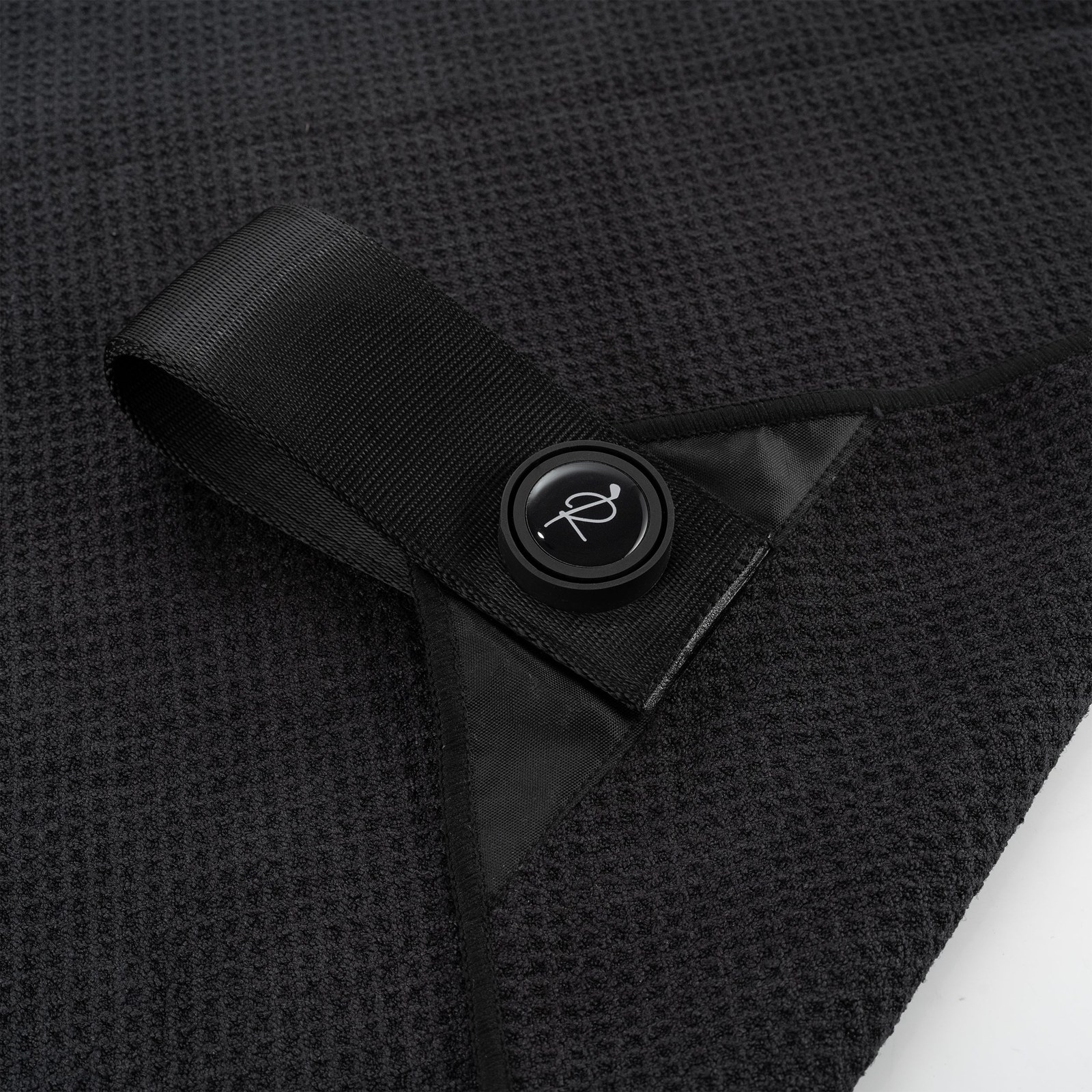
Waffle weave takes microfiber yarn and weaves it into a raised grid of squares. Two things change:
1. The ridges scrub. The raised edges of the waffle grid act as thousands of small squeegees. Dragging a waffle towel across a wedge face physically works dirt out of the grooves. A flat plush towel wipes across the top of the grooves and leaves the packed stuff in the bottom.
2. The pockets hold water. The recessed squares are reservoirs. A waffle towel holds more water per square inch than a flat towel of the same weight and releases it more evenly.
The tradeoff: a waffle towel is less plush against skin, so it's marginally less pleasant for drying your face on a hot day.
What GSM means and why it's the number to look at
GSM — grams per square meter — is fabric density. It's the closest thing golf towels have to a real spec, and it's often printed on the tag.
| GSM | What it means | Verdict |
|---|---|---|
| Under 300 | Thin, cheap promotional towel | Skip for your main towel |
| 300–400 | Light, dries fast, low absorbency | Fine as a dedicated dry towel |
| 400–600 | The sweet spot | Buy here |
| 600–800 | Plush, very absorbent, slow to dry | Good if you play in the wet |
| Over 800 | Heavy, luxurious, stays damp | Overkill for golf |
A 500 GSM waffle microfiber towel is, for most golfers in most conditions, the correct answer.
Head to head
| Flat microfiber | Waffle microfiber | Cotton terry | |
|---|---|---|---|
| Groove cleaning | Fair | Best | Poor (smears, sheds lint) |
| Water absorption | Good | Best | Good but heavy |
| Drying speed | Fastest | Fast | Slowest |
| Softness on skin | Best | Good | Good |
| Lint in grooves | Low | Low | Problem |
| Durability in the wash | Good | Good | Best (handles bleach and heat) |
| Cost | Lowest | Mid | Low |
So which should you buy?
Buy waffle microfiber if your main complaint is dirty grooves, mud on the ball, or a towel that stops absorbing halfway through a round. This is the majority of golfers.
Buy flat plush microfiber if you already carry a wet towel and want a dedicated dry one for grips and hands. Its faster drying and softer face are genuinely better for that job.
Buy cotton terry if you want a towel you can bleach and boil for five years and you don't mind lint. Tour caddies still use cotton for exactly this reason.
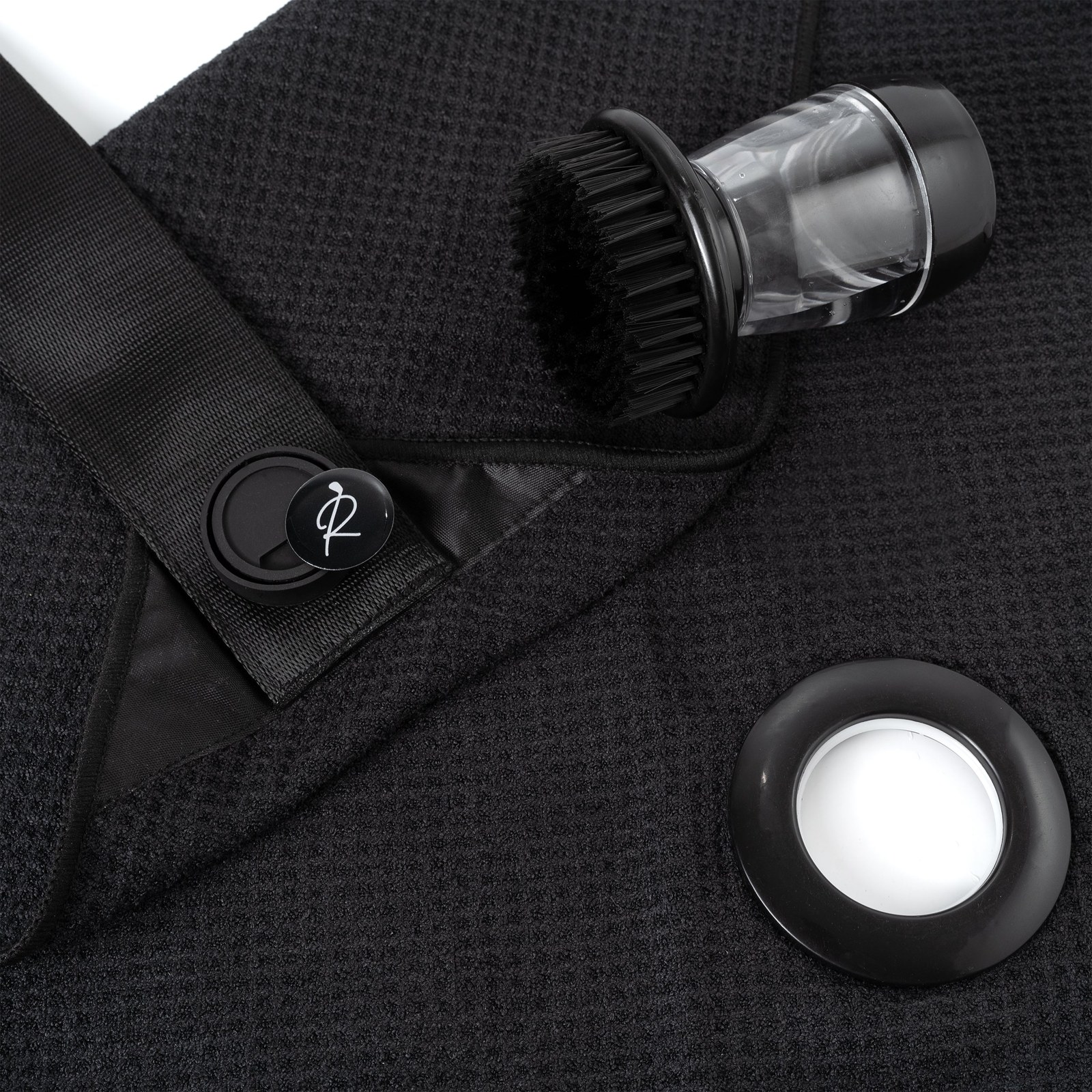
The best setup for most people is two towels: a waffle for wet work, a flat microfiber for dry work. Or a single towel that separates those functions structurally — the Ryft towel does it by moving the water into a refillable reservoir feeding a built-in nylon brush, so the waffle face never has to be soaked to clean a wedge.
The care rules that decide how long any of it lasts
Microfiber has one mortal enemy and it's in most laundry rooms.
- Never use fabric softener. It coats the split fibers with a waxy film that eliminates absorbency permanently. This is the single most common way people ruin a good golf towel and then blame the towel.
- Wash microfiber separately from cotton. Cotton lint packs into microfiber and clogs it.
- Cold or warm water, low heat or air dry. High heat melts the fibers flat.
- Skip bleach on microfiber — it's fine on cotton terry.
- Don't store it damp in a bag pocket. Mildew.
Follow those and a mid-priced waffle towel will outlast three cheap ones.
FAQ
Is a waffle golf towel better than microfiber?
That's a category error — most waffle golf towels are made of microfiber. Compared to flat microfiber, waffle weave scrubs grooves better and holds more water; flat microfiber dries faster and feels softer. For cleaning clubs, waffle wins.
What GSM is best for a golf towel?
400–600 GSM. Below 300 is a thin promotional towel; above 800 is heavy and stays damp. 500 GSM waffle microfiber is a safe default.
Why does my golf towel stop absorbing water?
Almost always fabric softener, or washing it with cotton items. Both coat or clog the microfiber. Sometimes it can be partially recovered with a hot wash using white vinegar and no detergent, but prevention is the real fix.
Do waffle towels scratch club faces?
No. Waffle microfiber is far softer than the chrome or stainless of a clubhead. The scratching risk in golf comes from grit trapped in a dirty towel, not the weave — which is another argument for washing it regularly.
Is cotton or microfiber better for golf towels?
Microfiber for performance, cotton for longevity. Microfiber absorbs more, lifts dirt rather than smearing it, and doesn't shed lint into grooves. Cotton survives bleach and industrial washing, which is why caddy towels are often cotton.